
You do not have to sell your soul to a DSO to build something bigger than one chair. That is the lie the whole industry keeps repeating: grow past one location and you either drown in chaos or cash out to private equity. Wrong. There is a third door, and the 1% are already walking through it.
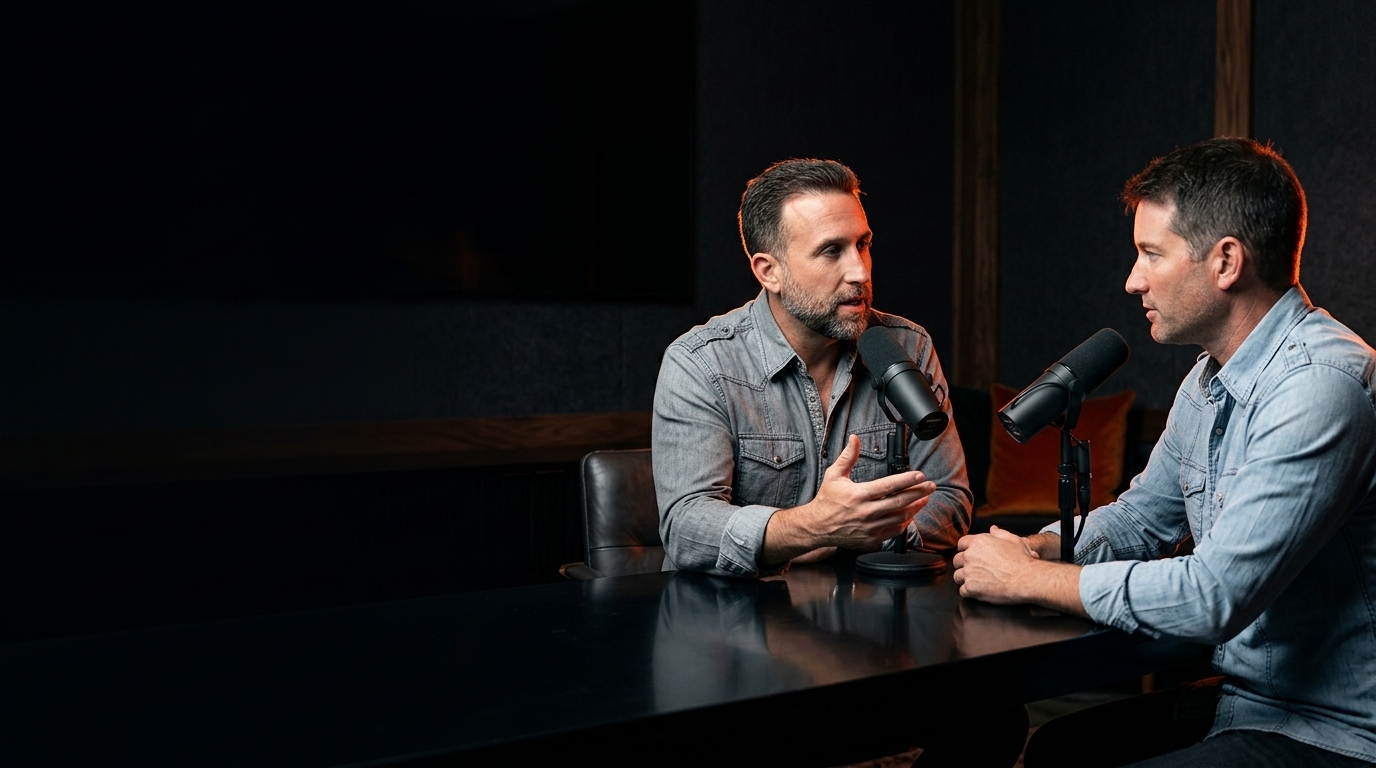
The dental group practice model — a founder-led collection of practices that share systems but never surrender ownership — is the most under-discussed path to real wealth and real freedom in dentistry. On the Bulletproof Dental Practice podcast, Pete Boulden and Craig Spodak have lived both sides of this exact question. Pete aggregated multiple locations into a group. Craig scaled a single flagship to the same EBITDA. Neither one took the DSO exit. Here is what they know that the Facebook groups get wrong.
A DSO (Dental Service Organization) is a corporate holding structure where outside investors — usually private equity — own the economics, control the P&L, and treat your practice as an asset on a spreadsheet. You become an employee of your own creation. A dental group practice model is the opposite: you stay the owner. You add locations or partners, you centralize the boring stuff (billing, HR, purchasing, marketing), and you keep 100% of the upside and 100% of the control.
As Craig framed it on the show, “People think DSO just comes with one flavor. There’s many different DSOs.” The point is not that DSOs are evil. The point is that most dentists jump to selling because nobody ever showed them how to run a group themselves. That is a training gap, not a law of physics.
Pete and Craig unpacked this head-to-head on a full episode — a real-world debate because their businesses are nearly identical in revenue, EBITDA, and headcount, just built differently. Craig did it with one flagship. Pete did it with roughly four to five locations. Here is the honest answer.
Pete (tactical): “In one, you can be more profitable… there’s a consolidation of things. You don’t have to buy a cone beam for every office. You don’t have to replicate the office manager in every location. There’s economies of scale in supplies, management, all things.” A single location gives you purview — you can see and control everything without duplicating fixed costs. A cone beam can serve 25, 30, 40 operatories and “there’s never a line.”
So on raw margin per dollar, the single flagship often wins — unless you are a sophisticated operator. And that qualifier is the whole game. The group model only prints money when you build the systems to run it. Without systems, five locations is just five ways to lose sleep.
This is where the group model quietly wins. Pete’s take: distribution is a premium. “I think there is maybe a half a point more on your EBITDA from a valuation perspective just because distribution is everything.” Multiple locations mean geographic diversification — you are insulated from a single-market shock. As Pete put it, if one town “turns to a shit show” or gets hit by a tornado, a distributed group survives while a single flagship takes the full hit.
Buyers also hunt for upside. A group with a flagship plus a couple of underperforming-but-fixable locations is catnip to an acquirer — they see room to add juice. A perfectly optimized single practice with a three-month waiting list can actually be harder to sell because the buyer asks, “Where’s our upside? You’ve already done the work.” That is the paradox nobody warns you about.
Neither — and both. A single location concentrates your stress into one building you can walk. A group spreads risk but multiplies the number of teams, cultures, and fires. The deciding variable is not the model. It is you and your systems. This is Craig’s territory, and it is the part the spreadsheet warriors always miss.
Craig’s whole philosophy is that a practice — or a group — is a reflection of the leader’s inner world. You can bolt together ten locations and if there is no shared culture, no reason people show up bigger than a paycheck, you have built ten liabilities. The founder-led group works because the founder’s vision is the operating system. The moment you sell to a DSO, that soul gets optimized out. Craig would tell you: the point was never just the money. It was building something that outlives you and lifts the people inside it. A DSO cannot buy that, and it cannot fake it.
The mechanics are learnable. The founder-led group runs on a few non-negotiables:
Pete’s closing instinct on the whole debate: “Please do not play in other people’s sandbox. Only play in our sandbox.” Translation — stop letting 21,000 strangers in a Facebook group with limiting beliefs decide what is possible for you. Most of them have never built one profitable location, let alone a group.
Independent owners who refuse the false choice between “stay small forever” and “sell out to PE.” The ones who build groups that keep them free are almost never doing it alone — they are surrounded by peers who have already made the moves, who share the real numbers, and who call out the limiting beliefs in real time.
That is the entire reason the Bulletproof ecosystem exists. Dentistry is a lonely profession, and the founder trying to scale a group in isolation is the loneliest dentist of all. Inside the Bulletproof Mastermind, you get in the room with owners who have built distributed groups, negotiated real valuations, and stayed independent on purpose. And every year at the Bulletproof Summit, that room gets bigger, louder, and more defiant.
The DSO wants you tired, isolated, and ready to sign. The group model — built with your tribe — is how you scale to an empire and keep every bit of it. You are not alone, and the best is yet to come.
Join the dentists building empires on their own terms → Bulletproof Mastermind.
The 1% of dentists, who want 100% from life.