Below is the complete transcript of this episode of the Bulletproof Dental Practice podcast. Prefer to listen? Find us on Apple Podcasts, Spotify, and YouTube.
The following transcription was from the Bulletproof Youtube channel. Here is the https://www.youtube.com/watch?v=CTGrxuLaka4
Craig Spodak
0:00:00
We have to be morose. This is a serious conversation. Although, listen, it's a good conversation. And also I want to say too, it's like, look, if there's somebody that's listening to this right now, what we're about to do, and it helps them, just one person, we're getting like five or six, 7,000 downloads per episode. Now we have your lift. So this one could be 10 or 12 or 15, who knows. But it's like, if there's somebody out there and we just help one person, that's success for you and me. I just want to remind you of that, you know, because it's not here to serve, you know, hundreds of people. We could just help one person like that guy that I sent you the text on. So I think it's a good intention for what we're about to do. So I'll do an intro and then you come straight in if you don't mind and just kind of say, what's your, what's your, the hook.
Jenny Perna
0:00:45
Yeah, I can do that.
Craig Spodak
0:00:48
Great.
Craig Spodak
0:00:49
Awesome.
Craig Spodak
0:00:51
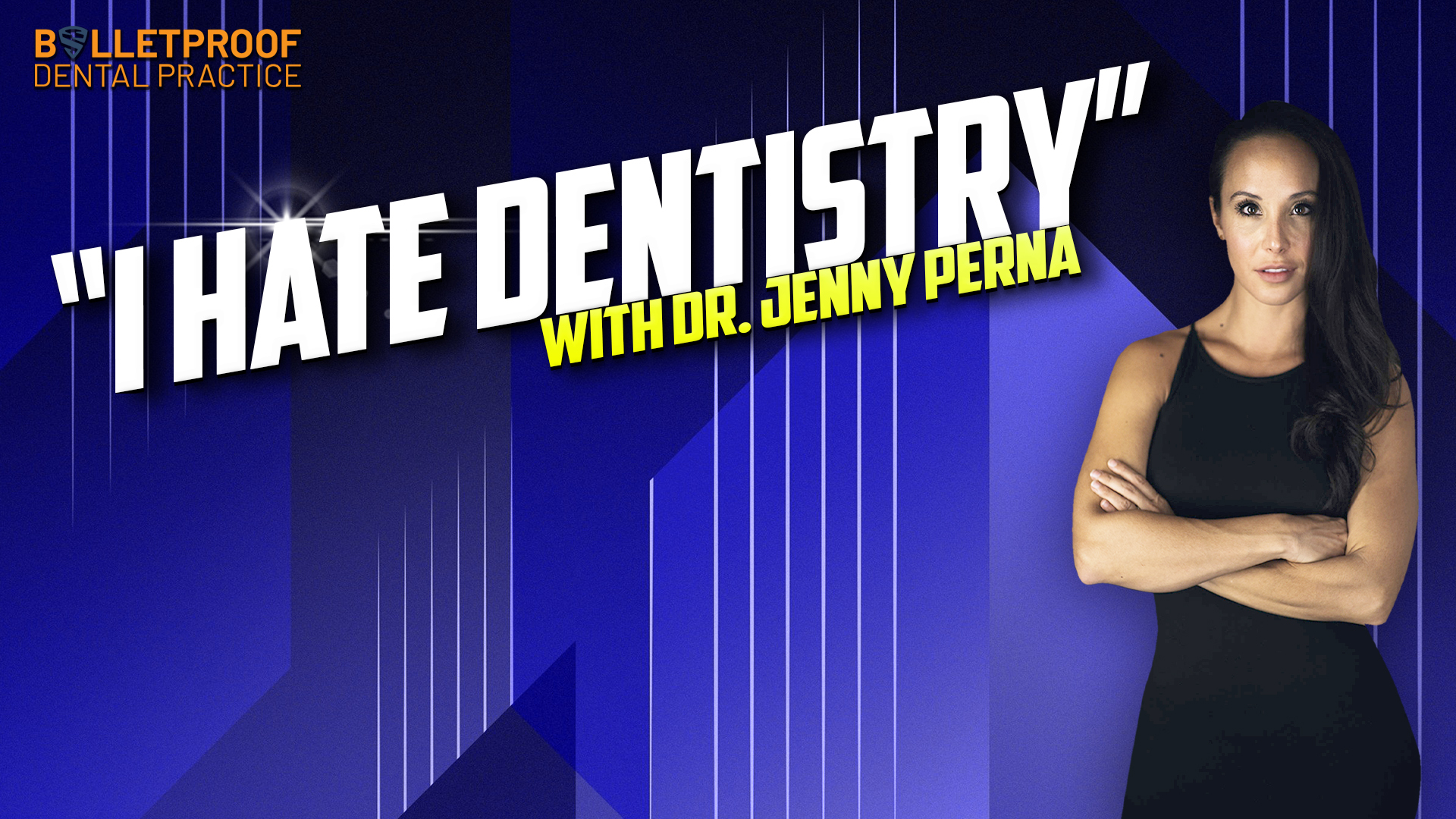
Hey everybody and welcome back to another episode of the Bulletproof Dental Practice Podcast. See, I almost didn't know the podcast, Jenny. I had to remember what we're doing here. Today I've got Dr. Jennifer Perna. You may know her as Yogi Dentist, one of my favorite people. And she hit me up a couple of weeks ago and said, hey, I'm getting a lot of information about something going on in dentistry. So that was the genesis of this. Jenny, really excited to have you here. Always excited to have you here. And fill the listeners in. What are we gonna be talking about today?
Jenny Perna
0:01:23
Well, I appreciate you having me on here as always, and I appreciate you taking the offer to podcast with me on this topic. Basically, it's something that I have experienced myself. I'm very passionate about myself, and I tend to get a lot of direct messages on Instagram about this topic. And the topic is, I hate dentistry. I hate my career or I think I do. I'm burnt out, I'm tired, dentistry isn't what I thought it was going to be, I don't know if I picked the right profession. And these are just a few of some of the topics that I get. I get it a lot from new grads, but it's not just specific to new grads. It happens throughout careers. I've met people at the end of their careers ready to sell their practices that I'm afraid if they don't offload this practice that they're going to hurt themselves because they're so burnt out from the profession. And so it's something, like I said, I've experienced early in my career, and we can get into that. and something that I consciously made a decision to try and overcome and find what can dentistry do for me? What am I looking for and what are the avenues in which I can have this profession fulfill me and I can fulfill the profession? So I'm just very grateful to be talking about it and be able to talk to you about it because I know you have such a wonderful perspective and it's also a passion of yours.
Craig Spodak
0:02:51
For sure, and it's also because I've suffered a lot as well. You know, throughout my career, you know, I've been in dentistry for, holy smokes, like 20, 24 years. So like I got into dentistry when you were three, Jenny. Is that true?
Craig Spodak
0:03:05
No, I don't know, it sounds good, but just let it go.
Jenny Perna
0:03:08
10, maybe 10.
Craig Spodak
0:03:09
It's fine, just let these things go. And I've had so many iterations of my career and I've taken some big risks and I've felt unfulfilled and sad and it really just pains me because I don't know if you listen to, we had a recent podcast with the guys from Shared Practices or one of the guys from Shared Practices and I asked them very point blank, I'm like, out of macro, what is the single largest issue facing dentistry? So in my head, I'm thinking depression, suicide, and fulfillment. I mean, we're unfortunately we're leading the pack in a lot of those things. And so I'm really quite unfortunate. And his perspective was the same store sales growth. That was the single largest thing that was affecting dentistry. And I think that we don't have an outlet and I'm proud that if this podcast can be the light for somebody to, and I've experienced that, you know, and with past listeners, they've come up to me and said like this has helped me a lot So just before we hit record I said that I said to Jenny like listen, you know We're gonna have you know, potentially thousands of listeners on this. Some people are dealing with an acute crisis at the moment They're like, oh my god, this is perfect timing. Thank God for this and other people like, you know, I'm pretty good right now Everything's everything's kind of going Okay but you know life can have a tendency to kick you in your ass and When you have everything perfect things come around traumatic events and business events and stuff, and it can bring you down to your knees. And I think if we could just help, if this podcast reaches just one person, there's somebody out there that's feeling alone, to know that even quote, and I'm using air quotes for those that are not listening, successful people like Jenny and I still have breakdowns, still have feelings of despair. Is this all I really wanted? Am I getting it? Am I satisfied? Am I doing the right thing? Did I choose the right thing? And I think a lot of it is just your mental state. And you have almost like, yeah, there's a good you and a bad you on either shoulder. At any given moment, you can choose to feed one of those voices. And things are real. The struggle is going right now. And not only in dentistry, Jenny, but we were just talking before we hit record too, depression rates, according to the article I was just reading and again, we are not mental health professionals. We're just kind of dentists who are dealing with our own stuff. But depression prior to pandemic was 8.5%. And then recently it was recorded at 32%. So to go from 8.5% of Americans saying they're feeling, having depressed feelings to 33, it's not just the dentistry thing. It's a bigger issue.
Jenny Perna
0:05:40
Right. And a lot of the people that, you know, we posed a question on Instagram with a lot of my followers and your followers to ask questions. And a lot of them are coming from graduates that graduated in 2020. And we were talking about this. It's just, it's right. You know, they graduated in the middle of a shutdown. And I couldn't imagine being a new grad, trying to find a job, you know, graduating with this enormous student debt, trying to find a job and trying to navigate this career while the pandemic's going on. So, you know, I think a lot of dentists are facing different challenges from the new grad to, you know, a seasoned dentist as well. And it's a topic that we should talk about.
Craig Spodak
0:06:18
For sure. And I think, so let's jump right in. Let me think about the causes. Oh, pardon me, let me discuss with you the causes. What do you think is causing this? Like, give me some of the ideas that you think are causing this.
Jenny Perna
0:06:32
Well, I think let's start at the new grad, right? So the new grad, there are a few things. Enormous student debt, we just talked about that. A lot of people, you know, you don't learn much about the real world of dentistry and dental school. So you don't know how to find a job. You don't know how to add value to yourself as a practitioner to look as an appealing candidate. There's very little guidance and mentorship. A lot of people will say, I'm looking for that unicorn opportunity for a mentor. And I really think it's a shame that that has to be a unicorn. We really, as dentists that have been in the profession, kind of need to take new grads under our wing in some capacity and help them navigate this profession. I think a lot of new grads are thrown into corporate entities. There are gonna be good corporations, there are gonna be poorly run corporations. And I think with that, if you're in a corporation that's maybe poorly run, and this goes for private practice too, that the expectation versus reality of dentistry just don't align. And it causes a lot of second guessing. I think it causes a lot of stress on the practitioner. You know, we don't learn how to lead a team in dental school, we don't know how to talk to patients. Yeah.
Jenny Perna
0:07:50
Grads are still trying to.
Jenny Perna
0:07:51
Handle conflict.
Jenny Perna
0:07:52
Yeah, handle conflict. New grads are still trying to navigate being a dentist and practicing dentistry.
Craig Spodak
0:07:59
We're really poorly equipped. We're really poorly equipped. We really are.
Jenny Perna
0:08:03
I think that's a good summation of everything that I kind of just listed off.
Craig Spodak
0:08:07
Yeah, it's unfortunate. I was lucky enough to jump into practice right at the get with my dad. And he was able to guide me. And it's interesting in our practice environment, we have so many different doctors supporting each other. So it's really, it's a nourishing environment. But the average person coming out that doesn't have either a father like I did or a supportive network. It's truly frustrating. And I read some of the comments and like dealing with patients and patients are upset. There's one one person saying to you, you know, I saw that that that DM was like they cut to they thought they prepared too much off their crown and they went on YouTube and that you ruined my teeth. And, you know, there's nothing worse because what has us go into dentistry is we want to help people. No one's like, I'm going to go into dentistry because I'm going to make a ton of money. It's like you think about being a dentist and thinking about giving care to people. And then I have somebody, when you do your very best and have someone say, you ruined me, you harmed me, you damaged me, it's so shocking and disturbing to your core because it's not who we are as dentists. So I remember feeling those feelings and you have to actually fight your way out of those. You can't just be like, oh, I'm sorry you feel that way. That's absolutely not true. And that takes time. At this point, if someone said to me, if I did IPR on them, they came in and be like, you ruined my teeth, I would be so able to defend myself because I've done 3,000 cases and thousands, tens of thousands of spots of IPR and there's no way I'm going to let you tell me that. But when you told me that the first time I did it, oh my God, that leveled me. I wouldn't be able to defend myself.
Jenny Perna
0:09:43
Of course, because when you're starting out as a dentist, you're navigating the world of doing the right thing. And you don't have that full confidence that you're always making the right decision.
Craig Spodak
0:09:55
No, you're not.
Jenny Perna
0:09:56
And the truth is, we, and I think a lot of dentists, we're perfectionists. We want to do it absolutely perfectly and if a patient comes back like that, it can dishearten you. And there's a really, really good quote that I love and John Kois has it at every single course. And it's a quote from Maya Angelou and I think it fits in really nicely here. And it's, do the best you can until you know better, then when you know better, do better.
Jenny Perna
0:10:21
And I think that's a-
Craig Spodak
0:10:21
Oh, I love that.
Jenny Perna
0:10:22
It's so good.
Craig Spodak
0:10:23
It's so good. Oh my God, that's freaking awesome. It always hits you.
Craig Spodak
0:10:26
I just got goosebumps with that one. Do the best you can until you know better.
Jenny Perna
0:10:31
Yes, and then when you know better, do better.
Craig Spodak
0:10:35
Oh, beautiful. Yeah. You know what, I just want to put a pin in that. You know what that is? It's having grace, grace for yourself, grace for your situation. You know, there's a lot of negative dialogue and it crushes me when people disparage other dentists, because that fuels a fire that consumes all of us. You know, you don't know what it's like, you can't judge a crown on 15, because that person may not have been able to open, and you don't know what's going on with that day, and maybe the dentist is having a bad day. We've all done work we're not proud of, and we redo it, shit happens. Yes, exactly. But having grace is huge, I really do believe that.
Jenny Perna
0:11:14
It is, I learned that lesson in residency. I remember I had a patient, I brought it to my attending and it was a filling. And I think it was just like a really deep amalgam filling and there was just something wrong with it. I can't remember what. And I was judging. I was judging that filling and my attending pretty much, you know, schooled me and said, you weren't in there doing that. You didn't. That was a very hard thing and they did a very good job for probably what was presented and I will never forget that. That was six years ago. I will never forget that conversation and I hold that to every single patient that comes into my office. If there's work that I don't think is perfect, I remind myself that I wasn't the dentist who did it. I didn't know the circumstances and there's no-
Craig Spodak
0:11:57
Yeah, you don't know how it presented. So, I mean, invariably it could have been the dentist that you're disparaging or thinking critically of, it could have been a redo of a crown. So the crown was prepped by somebody else and it's just really unfair. We have too much judgment in it. And what I like to tell patients, and I just say this all the time, I'm like, listen, they're like, was this done well? I was like, listen, you asked 10 different dentists, you had 10 different opinions. I happen to like chocolate. This is vanilla. They're both ice cream. I have a different way of getting it done. Well, why do you have to modify it? Because I like chocolate. I like to do things a different way. We have, you know, CEREC and the PrEP needs to be different. But I will not say it. But I used to, Jenny. I didn't learn the lesson in residency. I learned the lesson, like you learned it early. I learned it later. I do it a lot. I just couldn't help myself. It was a way of actually making myself feel good. You know, Tony Robbins always says there's two ways to make yourself feel great. Be great or tear everyone great around you down. So it's like, you want to be the tallest building, you can build the tallest building or tear the tallest building down. And at that point in my career, I was insecure, I suppose, and it was making me feel somehow better to put other people down. And now I know it just hurts everyone when you do that, including ourselves.
Jenny Perna
0:13:04
I agree, and I think it's, you know, to go back to kind of supporting one another, especially because we're all facing challenges within the profession, and to uplift one another and to have a community and to not throw other dentists under the bus to make yourself look better, because it really doesn't. It makes the profession look bad. And therefore-
Craig Spodak
0:13:21
And the patient won't like you either, by the way, when you do that, they get mad at you.
Jenny Perna
0:13:25
Right.
Craig Spodak
0:13:26
When you throw shade, you look shitty.
Jenny Perna
0:13:28
Yes, you don't look like a good person. But I do love that analogy about chocolate and vanilla ice cream, and I'm probably gonna steal that now.
Craig Spodak
0:13:34
Steal it, I mean, it's not stealing, we're actually giving this. I mean, this is the community that you're talking about is what we're trying to foster right now here. So whether you're alone or you're feeling bad, this is just stuff that we're all dealing with. And it's just normal, it's just normal. And I do believe that, you know, for the new grad, it's overwhelming, you've got COVID, you've got the pandemic, you've got, you know, all these different things that are going on. And it's harder because you don't have a lot of context. So for those of us that have gotten out before, we know there are better days and there are easier times. But like one of my favorite books, The Obstacle is the Way Through, you're gonna get your butt kicked and you're gonna dust yourself off and you're gonna get up and you're gonna keep going on. And that's, I think, what actually leads the most amount of fulfillment. It's not those who have it easiest, it's those who fall and bounce back up.
Jenny Perna
0:14:24
Absolutely, and life is gonna throw things at you. It's just the nature of life. Things are easy when it's easy, and it's always going to be easy when it's easy, and you're going to think you have everything put together. But when things start to occur, pandemics happen, staffing issues happen, upset patients happen, you have to find tools in which to navigate those situations that maintains your mental health, that you know you don't let it beat you down. And it's hard, and it's a practice and you know, I don't have all the answers obviously. We all just navigate.
Craig Spodak
0:14:55
Yeah, the Stoics did a lot of this stuff. I always talk about with Peter in the podcast that these problems that we're talking about today are the problems of humans and they've been around for thousands of years. And when you read the Stoics, you know, the Stoic philosophy, Seneca, you know, those guys. It was really about understanding that you have an emotional side to you. And when you get triggered emotionally, you can't think clearly. So we're all sitting here, things are okay for the moment, but things happen and then you lose your cool and you have to regain your composure and you have to rebalance your mental state. And that's just totally normal. I think most people suffer greatest because they actually feel they're the only one suffering. So they look at Jenny, they look at you, or they look at me, and you and I try to do, we do a really good job of making our lives look great with our social media. Oh, for sure.
15
0:15:48
You know?
Craig Spodak
0:15:49
We try to do that, it's just in our nature. We show the good stuff. We all try to show everything, but people are sitting there thinking like, oh my God, Jenny's got it all. Look at how, you know, she's got everything figured out and they don't get to say that.
Jenny Perna
0:16:05
She doesn't.
Craig Spodak
0:16:06
I know she doesn't because she's human. Or Craig, Craig's got it all figured out. I want what he has. Look at that thing. It's amazing. He's got, you know, Tony Robbins is patient. Amazing. And they suffer because like he's got it easy. And although I love my life and I'm super fulfilled, knock on wood, I don't have it easy. And the reason why I think I love my life so much is because it is in direct proportion to the amount of ass kicking I've had. Like from employees suing me to like three, two doctors quitting on the same day. I mean, I've had like some really, really rough days. You know, my son being airlifted out of, you know, last summer with a ruptured spleen and I'm on a med… I mean, life is not always going to be easy, but it's the suffering and the down moments that expand your ability to feel. And I think that we don't want to feel anymore. We believe that suffering, any form of suffering is cruel and unusual. And I think when you go through bad times, you're expanding your senses to feel. Like I've talked about that. I think I may have even talked about it with you. It's like you think of like you have a pipe and your emotions have to fit in a pipe. And imagine if your pipe has to be stretched like wider to a tunnel. So like the negative emotions can actually stretch you and when the positive times come, you actually feel more positive emotion as well. So I think what we're doing as a society is when we suffer, we're running off and we're, you know, a lot of people are taking a lot of meds, and the meds may be useful, and I can't speak to the scientific nature of the meds and what they do for, I'm not a clinical psychologist, but I do know they modulate the suffering. They modulate the downside. But if you modulate the downside, you modulate the upside. So you just feel less. And I think we're meant to, reel me back in, Jenny. I'm all alone here.
Jenny Perna
0:18:01
No, I love when you go off on your tangents too because every time I speak to you I just learn more and more and it's very insightful, but I Completely agree. I look back at my life. And yes what I show on social media I try to show a lot of good that doesn't mean that I don't go through things But I also don't want to use my platform to complain about my life on a day-to-day, you know so I I Think that social media can have a huge effect on people's mental state as well. But when I look back at my life and the challenges I faced, those are the moments in which I'm most proud of. I'm proud of who I came out on the other side as. I'm proud of the determination and the strength that I was able to show. I'm also proud of the vulnerability and the weakness within all those moments. Like you said, it gives you the capacity to feel and be human and to realize that we're all going to face challenges. We're all going to have moments of complete despair. You know, to get a little personal, Vince and I did a little bit of a fertility thing last fall and I won't go into it, but it was something that I was on the couch bawling my eyes out at one point and I I didn't show that on social and I think I'm starting to get ready to be able to talk about it more but it's for you I think that you know and and it was all proactive to be to be clear I know but it's super charged it's hard the whole
Craig Spodak
0:19:33
thing because I have a lot of you know women in my life with 50 female employees and all that. And the fertility thing, I've come to appreciate how charged that is. Because from a man's perspective, it's like, okay, well, there's a process. And for a woman, it's like, it is so charged and there's so much suffering around that and shame. And I think that we're going to touch on something else, which is, I think, which is shame. I think, because there's, I think shame is actually probably something that's causing this because people are coming out of school. They're looking at Instagram, they're seeing what other people can do and what they're, what they're up to. And they're like, I'm not doing that. And, and rather than say like, well, it's not, you know, I'm just learning. They don't give the grace for themselves and they feel that they're not good enough. So the difference between guilt and shame is like guilt is like, you feel bad about a behavior that you exhibited and you make a difference Shame is you actually feel bad about yourself. So it's like I made a mistake versus I am a mistake, right? So I think that the people saying to you and your chat like I think I made the wrong decision I'm worried about dentistry. They're actually feeling shame like I thought you know, I thought yeah No, and I fully agree. And I think there is a lot of shame that surrounds a lot of different
Jenny Perna
0:20:47
circumstances in our lives. And when you speak to like social media, everyone is really trying to put their best light out there. You know, very rarely are you going to see, you know, someone post a veneer case, right? Well, you're not going to see how many times they sent that case back to the lab to get it perfect. They're not telling you that. And then they're not telling you the amount of hours spent practicing to obtain these skills that they now can post on social media.
Jenny Perna
0:21:17
Or Jenny, one more thing,
Craig Spodak
0:21:18
or the fact that you and I look at that social media post and it's literally perfect, perfect results, but they're not posting that the patient is actually unhappy with it. The patient wanted four incisors that were completely square and flat across. Like, you know, like something unrealistic. Yeah, our nightmare. Like, oh my God, there's lines in my teeth. It's not all one color. I wanted my teeth like the porcelain toilet bowl. So we're not even posting that the patients aren't even happy sometimes with our project work.
Jenny Perna
0:21:48
Exactly, and so, and new grads see it, people in the middle of their careers see it, and it can be really disheartening. And I think you're absolutely right that it's centered around the emotion of shame. And I always, anytime I get these DMs, I always try to direct like, especially new grads back to the fact that like this didn't happen overnight. And you just have to keep growing and growing within the profession to be able to obtain these results and don't allow it to bring you down, but rather allow it to inspire you. Look at the, you know, look at the case of someone that you admire and ask them, what were some of the courses you took? How many hours did you spend practicing this? How many hours have you been in practice? What are some of the biggest failures you've had that you've learned from those are the questions to ask not oh my god I'll never be like that or I don't know how they're so good. Why am I not that good?
Craig Spodak
0:22:35
Yeah, we get rewarded in public for the things we practice intensely for in private No one no one saw Michael no one sees Michael Jordan going at 6 a.m. Just doing free throws and free throws. They just see the game right man. Look at that I mean the guy was kicked off his high school basketball team, you know, so no one sees all that. They just see they just see the showtime. But I think there's a technique by the way, I want to add something just kind of tactical for people when they're being challenged by a patient. So when when a patient is challenging you, or they're thinking that you've done them wrong, people, human beings tend to back down when you use when you use the phrases like my commitment to dentistry or my commitment to you and restating like almost like your purpose. So someone's like, you know, you took off the wrong amount of tooth or, you know, is this one that was hurting you? You know, that one, you know, well, the things that they say, or you should have known I needed a root canal beforehand. Just to, you know, kind of stand out, like don't look at those points as a time to retreat. Because what a patient's looking for is they've lost trust in you and they're scared. And what they really need is for you to step into your dominance or your authority. And I'm not saying like, who the hell are you? It's not that, but it's also like, hey, Mrs. Jones, I hear what you're saying. My commitment is to do the very best dentistry on every single patient. I treat every single patient, if you were there in my own family. I'm really sorry the way you feel that you feel this way but I'm not going to ever waver from my commitment my commitment is to always do the very best thing for the patient and if You were my spouse or my child. I would have done exactly what I did You know and I wouldn't change a thing and that's that's you know, you're not really you're not telling me that you know Screw off, but you're getting a little bit more dominant. So when someone wants to challenge you It's always an opportunity to turn something around to something more positive and I think a lot of the conflicts that have happened I've been able to navigate because I didn't really shy away from them
Jenny Perna
0:24:32
And even I think it but no go ahead. That's fine. I was gonna say I think it comes down to a lot of confidence Oftentimes, you know if you're not confident within your skill or how you're approaching a case or anything patients can read that But a confident. Yeah, I understand that but this is a different thing.
Craig Spodak
0:24:50
It's a confident in your motivation. It's a confident in what you stand for. So you're not saying, hey, Mrs. Jones, I've only prepped six crowns. I'm really sorry. You know, because that's different. It's Mrs. Jones. I became a dentist to treat every single person with the most care and sincerity I possibly can. And that's what I did with you. And I'm sorry you feel this way. But like, when you kind of say like that, your commitment, your life's work, something more authoritative, it can actually resolve a lot of things rather than shy away.
Jenny Perna
0:25:25
And when someone's attacking you,
Craig Spodak
0:25:26
you kind of shut you, you know, the natural is to shy away. I tell my entire team, when someone's upset, get excited. Because when they vent and you're still kind with them, they have a little bit of guilt, they feel bad. Now, so the person that's ranting online and all that stuff, someone's texted you that, I would leave them a public message. Like, hey, John, really sorry that you feel this way. My commitment is to take the very best care of every single patient. Please email me anytime you want. Call me or email me. I would love the opportunity to make this right for you. And even if he's completely a DB and he wants to go crazy, and he responds to that like, oh, F yourself, he's the one who looks terrible. You're writing it for the public opinion as well.
Jenny Perna
0:26:08
Right, and I think it's important to remember that we're not always gonna be the provider for every single person in this world, and that's fine. And I think when you first graduate, you want to. You have to be the person for everyone. And the truth is, that's the nature of life, right?
Craig Spodak
0:26:22
It's hard to shake him, Jenny, it's hard to shake him. I've had people, I'm just like, before I start, I'm like, listen, this is not going to go well. I really don't think you should use me as your provider. Nobody really want you. I'm like, I know, but it's really not going to go well. And it didn't go well. And the whole time I'm trying not to get them. I raised the fees. I've done everything I possibly could and they still go. And they still because it's like, how do you tell like at a certain point when they really, really it's really hard. I've literally told people, I don't think, you're making a bad decision. I'm not gonna be able to make you happy. Well, why do you say that about me? I'm like, if I can just tell by the questions you're asking and the things you're saying, you're gonna not be happy with me.
Jenny Perna
0:27:02
Right, and it's an important skill to learn because I think too, oftentimes, you wanna do, you're excited to do a case or something. You have a case presents and you're just so excited to dive in and do this case, and you didn't realize the personality attached to the case.
Craig Spodak
0:27:16
And cosmetic dentistry by the way is not about the dentistry.
Jenny Perna
0:27:19
No.
Jenny Perna
0:27:20
Not at all. It's about the psychology.
Craig Spodak
0:27:22
It's the psychology. So like regular dentistry is like, hey Ms. Jones, you got decay, we got to fix this. You need to fix it. If you don't fix it, root canal, crown, implant, blah, blah, blah, let's roll. Cosmetic dentistry is like, here's your life now. Come follow me on this journey of making your life better, feeling more confident, feeling better about yourself. Bullshit, you fix the teeth, you don't fix the brain.
Jenny Perna
0:27:44
No, no, and it's something to, you know, whenever I have a patient, and this is a little tip, if there's ever a patient that is coming in for a cosmetic consult and I'm a little concerned about their expectations versus what we're gonna be able to deliver, I will do like a motivational mock-up that I'll put into their mouth and let them look at it. And I've had patients where they, you know, they have those, the mock-up in and they are very, very analytical and they're worried and they're concerned and I'll have an honest conversation of, are you ready for this? Are you ready for this change mentally? Because if you're not ready for this today, then I don't suggest we proceed. We can probably proceed in the future, but you have to be psychologically ready for a life change to be able to proceed within this dentistry.
Craig Spodak
0:28:34
And then also painting a very realistic picture around the healing time, new teeth, new musculature, new phonetics, like just telling people, I love this from Dr. Liesel in my office, she says, do me a favor, don't love this or hate it for a couple weeks. Suspend judgment because it's almost like when you install like your refrigerator and the delivery guys are about to leave, you have to sign off on that shit. If the refrigerator is in the wrong spot, you don't like it, you're done. And I think patients feel that way with dentistry. The minute it goes in, it's like in the chair, it's like, hey, just don't love it or don't hate it. I'm here for you. If you think number 10 is too long or number 7 or 10, we can always redo it later. Just don't, you have to heal. You have to learn how to re-speak and your phonetics, your musculature. We added three millimeters of tooth structure. Open your bite. So I think that like not allowing them to kind of marinate with it, not feel so rushed to like it or hate it is really a really powerful tool. And also figure out their motivation. Why clear aligner tips since you gave a tip. When you ask patients what they don't like about their smile and or what they're looking for, obviously you see their crowded teeth or you see what's going on You have the reasons that you want to fix their smile, but find out what it is that they want So they may actually say like I just don't like when I turn to the side You see how my lip kind of curls in i'm like, yeah, I mean not really but tell me more Well, I just know that when you put my teeth in the right position, my lips will be fuller i'm like, okay I'm, really glad you said that Because I can't promise you that at all. Right. Yeah. I appreciate that you think it, but if that's the primary motivation for you wanting to straighten your teeth, let's not do it. Because there's other reasons because your teeth are crowned, you can't clean them and they're wearing and blah, blah, blah, blah, blah. But if that's the primary reason, let's not do it. And like, no, no, no, it's not the primary reason. You know, I was just hoping I'm like, let's not hope on that.
Jenny Perna
0:30:19
Let's not plan on that. Let's also treat and plan some lip filler for you. Exactly.
Craig Spodak
0:30:23
Exactly. Or it's like, I want to do my veneers because I know I'll get a boyfriend or a girlfriend
Jenny Perna
0:30:28
right away.
Jenny Perna
0:30:29
Yeah, let's not plan on that. Don't put that pressure on me. But I think these are really good tips for just managing patient expectations. And I think that that leads to better relationships of trust with patients and hopefully less and less and less complaints or concerns from patients as you continue to practice. So I'm glad that we went over some of those tips.
Craig Spodak
0:30:52
Of course, of course.
Jenny Perna
0:30:55
So something that I noticed, some people writing in as well, or people to get off of the new grad topic is more people that are seasoned within their careers right now, but they're facing challenges with the team, especially during the pandemic and being able to hire people, being able to keep valuable team members. And I think this is an avenue in which you obviously have a lot of expertise and especially with like the mastermind and hearing the challenges that those individuals face and maybe some tips of navigating, just working with a team and having to navigate a team dynamic during this time?
Craig Spodak
0:31:39
So I have a tip and if I had to distill it down to one tip, because I think there's many, but there's just one thing that you could possibly do that could shift everything. I've seen it happen so many times. When we get upset, we go inward. When we don't get appreciation, we go inward. When we don't get the love we want, we go inward. The hack in life is you get what you give. So the team is people that work in our practices, especially assistants and those types of wage earners. Those people are under extreme stress. When gas, fortunately for me, my situation in life, if gas goes from $2 to $5, it doesn't affect my life. I'm blessed It doesn't affect me. I don't even care But and I'm not trying to be cavalier But what I'm saying is that we have to get into the perspective of what's happening for those people That are that that work with our practices And the way in which you can make your team great is by just appreciating them. It's the largest portion of our expense line of any P&L. If you're doing it right, it's around 25 to 30% your team, your support team, your team wages and all that. And what I've learned is that when people are feeling most dark, and I talk to a lot of dental business owners, I tell them to start appreciating those people. When you trade your expectations for appreciation, your life changes immediately. We're expecting too much from people. We're not appreciating in them. And that's something you can literally, if you're listening to this on a weekday, you can literally stop this recording and go around to two or three people. And maybe you're not, maybe it's not a workday. You can just send a text message to one or two of your people. Hey, Janet, really appreciate, you know, that you stayed late the other day. It means a lot. I'm not great at appreciating, you know, or maybe I'm not as good as I should be about it, saying how I feel, but I just want to let you know how I appreciate you. Your team will light up. People light up. When I feel depressed, they're upset, I find all the people I love and appreciate and I start texting them like crazy. I just do that with people.
Jenny Perna
0:33:56
Yeah, I think you bring up a really good point and we have to look at our team that we're working with them and they're not working for us, right? And so we are in the nature of the name, we are a team. And I think as dentists too, we often have this mentality because when we go in and we see a patient, we are looking for problems and we're looking for solutions. So often with the team, if things are maybe not going the way that we anticipate, we have problems and then we'll create solutions. But we also need to remember to appreciate all the things that they do do within the practice. And is it maybe to the level you want them to do it? Yeah, I'm sure there's some things that your team is doing excellent and you need to recognize that, exactly what you were saying, and obviously make them feel appreciated. I think that's such a good point.
Craig Spodak
0:34:42
Yeah, and it's a tool I learned from the greats and even the people that are the greatest that I love the most and have the most amount of respect. My mentors do that. I'm going to play you a text message I got just randomly one day. You'll recognize who the voice is. It's four in the morning.
Craig Spodak
0:34:58
I'm just getting up to bed.
Jenny Perna
0:34:59
I just want to let you know I was thinking about things I'm grateful for in my life.
Craig Spodak
0:35:00
I'm really grateful that our friendship has developed. You know who that was, right?
Jenny Perna
0:35:02
Tony Robbins.
Craig Spodak
0:35:03
Yeah.
Jenny Perna
0:35:04
Yeah.
Craig Spodak
0:35:05
So if he's doing that, imagine how many other people in his life he could have reached out to. You see these people, and I've lived now, I'm 50, and I see successful people, and what I call successful people are people who are fulfilled, present, and happy. I see people who have recurring themes in their life, and they're just able to appreciate things. They're able to appreciate the small things in life. One of my buddies, John, he's a very, very wealthy man. He has all the things that a wealthy person would have, you know, big yachts and jets and all that stuff. And I have the ranch I'm always talking about, I've told you about it before, and I have a trailer there, a very small, small trailer. It's actually funny because there's people that live next door to me that's a homeowners association and they were talking about the person, they were meeting me, that lives in the substandard living conditions next door to us and they were referring to me because I guess it's a trailer or whatever. And my buddy John winds up looking in my trailer the other day and he looks to the left and he looks to the right and he's like, you know, Craig, I could actually live here. And he meant it. So he has all this great stuff in his life but he still appreciates the simple things. I always say this, and I got it from Tony himself, the science of achievement, and we're scientists at heart, we know how to do the crown prep, the five steps to this, the four steps to bonding this, the diagnostic criteria and the way things go, but life is a fulfillment, it is an art form, and fulfillment is an art form rather. And it's really incumbent upon us to figure out what makes us happiest, really do a deep dive on it, don't hijack other people's beliefs, and really find out what it is that makes us happy. You can't hijack someone else's vision. You can't go to some weekend summit and then realize you need to open up seven or 10 practices or learn the seven minute endo or go through poise. You gotta figure out what makes you tick. And once you start living authentically in what you want, it'll provide you with the fulfillment that you want. And you will go through tough times and you will get your ass kicked, but you'll wind up being fulfilled.
Jenny Perna
0:37:20
When I was putting together some of my thoughts for the podcast, I thought about what advice would I give in these circumstances. And my number one advice is actually from you when you always say, know thyself. You have to really dig deep to know what you want to then know how to go and get it. And so if you try to hijack someone else's vision for their life and their career within dentistry, oftentimes even if you achieve that, you're not going to have the fulfillment that you thought you would have. And so I think that's an excellent, excellent point. And I encourage everyone to really dig deep. And it's hard. It's hard to really know what you want. You don't know what you don't know. So, you know, figure out what do you want professionally? What do you want personally? How do you want to be fulfilled financially? And then how does dentistry do that for you?
Craig Spodak
0:38:13
Yeah, if you don't know what you want, you'll never get there. Absolutely. You'll never get there. And there's so much competition. I mean, I think that's why Hollywood is really filled with a lot of people who are deeply, deeply unhappy because, you know, think about like being a child and acting and then always competing to try to get a part, to try to get a role. You don't even, you're, you're, you're literally got blinders on, you're running towards a goal and you never have a chance to cross, to examine it. All of a sudden you get there and you're like, oh shit, I'm famous. Like I've made everything I wanted. This is it. And now all these people love you and they don't even know you. And you never really thought about what it is you really wanted you wanted love and connection probably like most humans do but you wind Up getting fame, and that's a really crappy substitute for love and connection because it's really they like you for the wrong reasons and that so I think it's really just incumbent upon each person to figure out what makes them tick and You know I keep saying about 50 that I'm 50 because you know even at 42 and 43, I was not as fulfilled. There's a lot of stories amongst my office of like, oh, I remember, I've heard how you used to be, Dr. C. They call me Dr. C. I've heard how you used to be, and I can't believe you were like that. So for those that are 28, 32, 35, or even 50 years old themselves, just give yourself a little bit of grace. Know that we're all in our own timeline. I just had to go through a lot of stuff. I had to mellow out and see what I was doing, see the damage I was causing. And I don't regret any of it. I don't wish I, I went through the path I was supposed to go. I think another thing is like life happens for you and not just to you. You get exactly what you need. So if you're upset about your family and your mom and dad weren't the way they were supposed to be, and I wish I had Jenny Perna's mom because she was so so great. You got the mom you needed. I just wanted to give her a shout out. Right, but you got the mom and dad you needed. If you had the perfect parents you wouldn't be exactly who you are and you said something early in our podcast that you're really proud of who you are. That pride comes from being aware of your strengths and your weaknesses and giving yourself grace You can't sit here and just say like, you know My life is bad because of this stuff or that stuff you have to realize it's all for your development all for your growth you know the wind blows hard on the on the young tree and the roots grow deep and the You know and everything shapes you everything in life shapes you So whatever you're going through if you're going through something right now If you're really feeling like you can't see your way through it, you don't have to have the answers right now. Just know that it's for your greater development. Just there's always a silver lining. Everything in my life that I was sure was the wrong thing for me wound up to be, oh my God, that was actually really good.
Jenny Perna
0:41:04
It was crazy.
Craig Spodak
0:41:05
It's like I had a bank that when I built this building, I heard a rumor that the bank was going to be sold and it was a very risky thing for me to build this building. I borrowed millions and millions of dollars and the banks literally all rejected me, but one said yes. I was very scared because I knew I was way over my head. I said the bank is going to get sold and they said, ìNo, no, weíre not going to get sold. Donít worry.î Because my fear was if the bank got sold, I wouldnít have a relationship. If I ran out of money and they wouldnít know me, they wouldnít be able to sell myself to give me more money. Long story short, the bank did get sold and I was really nervous because I did run out of money. But in the fray of the bank being sold, which I thought was a terrible thing for me, they lost my paperwork. Instead of the money being due on January 1st, I got a loan from God because I got shuffled around with the transition of the new bank and I didn't have to owe that money for months and months and months. So the thing that I didn't want to happen, happened. I suffered. I couldn't sleep. I was upset only to find out that it was the very thing that got me to where I am today because without that, I wouldn't have probably had the float and I would have gone out of business because of cash flow.
Jenny Perna
0:42:17
Yeah. I mean, I think that every instance that challenges us gives us an opportunity to grow and you brought up having a different mindset around it and looking at those challenges as opportunities. And I know it's a book that you guys have talked about, but Mindset by Carol Dweck is fantastic of having that growth mindset and not a fixed mindset when you're navigating life and looking at perspectives. And I just reiterate the fact that I am grateful for all of those challenges from, you know, my very first job was something I would cry about. I would go home, I'd pour myself a glass of wine and I would cry because I was so concerned that I put myself in so much debt for a career that wasn't going to fulfill me. And there's a really funny meme and I think it's really good for undergrads. And it says, what's the strangest thing you've done for cash? And it's, I took out a loan to go to school so I could get a job to pay off my student loans. And I think that's how I felt. I felt that when I had first graduated. And it's a lot of stress. But now I look back at that opportunity that I had and I look at everything that it taught me about this profession.
Craig Spodak
0:43:36
Well, it also gave you freedom too, Jenny, because no one can repossess that knowledge. You can literally look at the United States and say the coolest possible town there and say I can make a living there. Who can say that?
Jenny Perna
0:43:51
No, and that's the truth.
Craig Spodak
0:43:52
So when I did this big building, yeah, when I did this big building and I said, okay, what's my plan B? Because it was really close, Jenny. I was really close to failure, really close. Like when the building, I have like a $35,000 payment coming, I had a $40,000 payroll, I had no money. I had like a yellow piece of paper with all my rich friends I was gonna borrow like 10 and 15 and 20 grand from. It was really, really hectic. But I said, okay, the worst case scenario, I remember going to Carmel, California, and I loved it. I'm like, you know what, if it all blows up, I'll just like work with somebody there, you know, I gotta be one or two chair, you know, one or two chair practice and I could be fine. So that security, what you've bought for yourself, those that are newly graduated and feeling oppressed by your student debt, you've bought the freedom and the ability to work anywhere.
Jenny Perna
0:44:42
Right. Anywhere.
Jenny Perna
0:44:43
And dentistry, and this is something that I always try to speak on, dentistry has so many avenues to quote unquote success. And you can take a multitude of avenues and that's the beauty of this profession and so if you're finding yourself stuck within a an environment or a Position or a situation that's not fulfilling you you can change it and you can cultivate what you want And that can look like anything. Yeah, you just have to be a manager
Craig Spodak
0:45:09
Imaginative I was working with one of our masterminders and he's like talking about, he does a lot of fornectomies on babies. And he's looking at his new patient numbers and fornectomies on these babies. I'm like, why? He's like talking about that he's doing a video. He's going to start video advertising. I'm like, so you're going to do more of this? I'm like, that's awesome. What do you love about it? Oh, I don't like it. I'm like, well, why do you do it? Well, because when I first started, I was the only guy who did it and the mom's like really wanted me to do it. I'm like so why are you continuing to do it? And he had no answer. So it's like there's a thorough quote it says the unexamined life is not worth living. He doesn't know himself. He's just doing the same thing he's always done. And someone when you I always ask why like I'll tell people like what do you think of my practice? I'm like listen I can't tell you that because your life might drive me crazy and I'd want to fix everything about your life to suit my bias and my needs, but your life is not for me. Your life is for you. So I'll ask, what do you think about that? And then like, well, blah, blah, blah. And they'll start opening up. I'm like, perfect. Now we're getting somewhere. Right. But I think in dentistry, one of the largest problems outside of the other stuff we were talking about is that there's a lot of consultants or, you know, using air quotes for that, that will actually tell you exactly what you need to do, Jenny. You know, like, like when we've talked, I'm like, hey, you got to do what makes you happy. And we've done like the culture index and stuff like that, like just to point out your strengths and all that. But it's just important
Jenny Perna
0:46:42
to, to make your life suit you and no one else. Right. And I think, you know, to speak on the culture index, and it kind of shines light in this, there's some people that are comfortable being uncomfortable, and there's some people that do not want to be uncomfortable. And to make any life shift, you have to get uncomfortable. And so some people will stay in a toxic space or a space they know is not fulfilling them because it's comfortable, it's regular, they know what to expect. And I fell victim to that within one of my associateships as well. I was stuck because it was just, I knew it was quote easy. It was never easy, but it was easy just to continue to do the same thing because I knew what to expect. And then when you get on the other side of it, you realize you probably should have left sooner. You know, you probably should have redirected sooner and really figured out what you wanted sooner so that you can then therefore cultivate it.
Craig Spodak
0:47:35
Yeah, I don't think, I think looking backwards like that, and I think that's an important thing to talk about as well Jenny, too It's like, you know change doesn't take time you change in a second It's just the realization that you have to take make a change could take years So like once you decide like in a bad relationship, like I'm done. This is it. This is the moment It did happen in a moment like literally got a call like, you know, screw this I'm out of this, but it takes time to realize it's gonna change and I've made I've looked at That too. Like I suffered a little longer. I stayed stuck a little longer Just took me that much longer to realize I freaking hated whatever where is that? So yeah, I think that you know You shouldn't have made that change sooner Cuz I think that's a good point I think you know it it took time to get to the point and I agree with that and it's not a person who pours your heart into things. You're loyal and there was Cindy the hygienist and she was great So there was good things about it was a toxic situation, but there was other things your job wasn't done so when you finally You know It's like kind of being sick and tired of being sick and tired of the alcoholics like they drink and drink and drink and then one Day like done I'm done, but I don't think you should look back at that Like I just want people with my experience through my 40s I could have had a little bit easier if I didn't overindulge in suffering. I was oftentimes walking around, even with all the blessings of my life, like, poor me, I can't believe this, no one cares, blah, blah, blah. And that is caustic. It's toxic and caustic, and it cost me a lot of good people and bad things around me. And I started realizing that, you know, I have to figure out a way every day to appreciate something. So, you know, that's important for me.
Jenny Perna
0:49:15
I agree. And, you know, speaking on that, I think it's good to find tools in which outside of dentistry give you good mental strength. And that's going to look different for every single person. For me, it's very much exercise and working out and journaling and meditating and doing yoga. And those are my anchors. You know, that's what keeps me mentally strong. For someone else, it might be drawing. It might be speaking to a therapist, getting massages, you know, whatever it looks like. But again, knowing myself of how are you going to stay mentally strong as a human in the instances in which you're needing to be really, really strong?
Craig Spodak
0:49:52
Well, I also think I appreciate you, you're, you're being graceful with that, but there is an absolute truth to one thing you said, and it's not dependent on the person, it's that you cannot be mentally strong when you're physically weak, you can't. Dentistry is really hard on your body. The positions we're in, the static movements, if you wanna be successful in dentistry, you have to exercise, you have to strength train, you have to do something. And by the way, I'm not talking about what you do and all the iron molar and you know that level. But go for a walk, get out, like listen to this podcast and go walk. Just walking. But you know I have so many people in my life that are overweight and they're literally coming to me and I'm biting my tongue because they're like, hey I've gone to three doctors, they can't figure out what's wrong with me, they've done tons of tasks, they can't figure, my knees are hurting, you know, I just get tired all the time. I'm like, you're walking around with a hundred, I don't say this, but you have a hundred pounds, you have another human on your back. You're fit as hell, Jenny, but if I, if I had Vince on your back all day, every day, your body, your knees, your body will break down. And I think you cannot, I hate my workouts. I hate going in every day on the way in. I'm like, I want it. This is the day I'm going to stop. I'm not going to do it. I'm quitting today, every single day. But the days I work out, I have better days. I'm more mentally acute. I'm more positive. I have better energy. So that's not just, I appreciate your being kind about that, but that's not just what does that work for you. You must work out. You must do something physical every day, or at least four or five days a week.
Jenny Perna
0:51:38
Absolutely, I mean, you know I'm very passionate about that. That is, like I said, it's an anchor.
Craig Spodak
0:51:43
You're being soft though. You're like, I could work for you drawing. Yeah, drawing's not gonna get your body in a space where it can be better.
Jenny Perna
0:51:50
Well, I think, I mean, you bring up a very good point that dentistry is very taxing on our bodies and we can't ignore that. And so having mobility and being able to stay physically strong will help with the day-to-day in dentistry. And I mean, I fully agree. I think working out has been one of the absolute best things that I've incorporated in my life. I'd say I'm lucky in a sense because I was always active. So it was always part of my life. So when I get asked, like, how do you find time? I think to myself, how do I not find time?
Craig Spodak
0:52:20
Well, I told my trainer, I wanted him to coin this, maybe he could coin it. It's either you're gonna rehab you're gonna prehab So people will get like I know that one of the reasons why like Appa works out so much is he had a really bad Back, so he actually went through and had it the other way and that's what typically happens in life Something gets taken away from you and then you appreciate it So, you know for those for that for those that have been injured before You start to appreciate because really when you're rehabbing you're just doing strength training.
Jenny Perna
0:52:50
Right, exactly.
Craig Spodak
0:52:51
So you might as well prehab and not have to get injured.
Jenny Perna
0:52:54
Right, and to a point that you made, I don't think that we ever go into a workout and we leave it and we're like, man, wish I didn't do that.
Craig Spodak
0:53:02
That was, you know? No, but how do you feel when you go in? Are you excited to go in? You're probably one of those people that are like, love it.
Jenny Perna
0:53:07
I freaking hate it. It's day to day. Some days I'm like, I can't wait to get in the gym. Let's live in the gym. Let's just not leave the gym.
Craig Spodak
0:53:14
I don't think I've ever felt that way.
Jenny Perna
0:53:15
And then some days I'm like, you can't get me in there. I will not go in there. And it's in my garage. So I really shouldn't have an excuse. Yeah. If I had a gym in my garage, I would never
Craig Spodak
0:53:24
use it. I literally have to pay someone to drag me there. That's a great tip. If you're the person
Jenny Perna
0:53:31
that doesn't want to work out, pay someone to do it. Get someone to make you accountable to do it.
Craig Spodak
0:53:36
I show up, I'm like 45 minutes left 44 minutes left 43 minutes left are we done are we done and then I have to like go back and thank my trainer like hey listen I don't
Jenny Perna
0:53:44
know pain the ass thank you for pushing me through it yeah I think I mean I think it's great and I will always support and advocate that people continue to to strengthen their bodies and I think even going for a walk like you said is a fantastic way to start and you feel good you feel good after a workout. Your body feels good. Your mental state feels good.
Craig Spodak
0:54:04
And then you'll be less depressed. You will find a way. So if you're also that person that's like, I've tried everything. I can't get in a good state. Have you tried exercising? If you're not exercising, do it. You gotta do it. I mean, I really appreciate the drawing comment. You can draw and exercise, but you gotta get your body moving. It's the oldest secret ever.
Jenny Perna
0:54:28
Truly, and you know, we all know this, it's natural endorphins. You're getting pumped with endorphins. It is, it is. And I have a rule that I always try to stick by, and it's hard sometimes, but I really try to disconnect from any social media during workouts or answering texts or emails or anything like that. I'll listen to a podcast on my phone or music, you know, so I will have my phone with me, but I really try not, I try to disconnect a little bit and really just focus on myself. And I think that's a beautiful practice too, to prioritize yourself at times.
Craig Spodak
0:55:02
That's awesome.
Craig Spodak
0:55:03
I wanna tell you one, like a story about the sending out recognition that we were talking about just a moment ago. So one of our masterminders, really good guy, super successful guy in Texas, like making lots of money, great leader, really good guy, feeling unfulfilled and burnt out, probably like 45. Like most people would look at him like, damn, he's got everything, got a young children, everything's going really, really right, but he's kind of losing some of his passion, getting a little lost, and I was working with him, and I said, listen, what I want you to do is I want you to start reaching out and just appreciating people. I want you to do three a day, text me when they're done, blah, blah, blah, blah, blah. So he did one, he screenshotted to me, texted somebody and the person wrote back and it's like, man, you have no idea how important, he just said, listen, I'm just kind of on a gratitude kick and just want to know that I appreciate, you know, I'm thinking about all the people that I'm appreciative of and you good sir, are one of them. Guy writes back, man, you have no idea how timely this was. I'm literally in my kitchen crying like a school girl because I just lost Clark's friend, someone just died. And it was just like, it was crazy that that happened. And so it was this, I wrote back, I mean, not to get spiritual here, but I wrote back to the guy, I'm like, to me, that's God. Like that's some sort of universal energy that connects all of us. And that's what you're experiencing right there. The very next day, so this person's been doing three a day and he was doing it every day. The very next day I had a meeting with my office manager, Erica. And Erica gets a text on her phone. She doesn't look and she looks at it. And her eyes get red. And her face gets flushed. I'm very emotionally aware and I could tell it was either something something's gonna make her cry So it's a girl. Are you okay? She's yeah. Yeah. Yeah, I'm okay I think it's not a bad thing or a good thing. Like I don't know like you look really upset She's no, it's really really sweet. So what it was was this girl texting? It was an office manager of my friend That I told to text people and tell them they're gratitude. They're great that they're great that he's grateful for them. She wrote to Erica, hey listen, I know as an office manager it's a really lonely place and I want to tell you that all the things you're doing through the Bulletproof Office Manager and the Mastermind are helping me so much and you're amazing, blah, blah, blah, blah, blah, made Erica cry. So I text the Mastermind, I'm like, hey, bud, just curious, did you happen to text, I'll use a fake name because I don't want to out any of these people, did you happen to text Jane the other day? He's like, yeah, I just texted her this morning how much I appreciate her. And I said, so I'm like, this is the interconnected nature of it. So my buddy's suffering. I tell him to reach out for people. He starts doing it. He feels great. He reaches out to somebody else who then reaches out to someone very important to me. And that's, that's we, we, we, when we feel less love, give appreciation. It's a hack you can do right now. We all can find two or three people we're appreciative of. Pour into them. So if you're one of those people in a dark, dark space and you really can't figure out what to do, go for a walk, as Jenny and I just said, and find two or three people to appreciate and really pour into them.
Jenny Perna
0:58:23
It'll make you feel great. I fully, I fully agree. I think that, you know, really digging into what you appreciate about your life and the people that surround you within your life. No one, no one's going to be sad if they get a nice text message like that, you know, like it's so appreciative and it's important to, to pour out, you know, what you need as well. What you give is what you get. So I, I absolutely love that story. Yeah. Isn't that a crazy story? That's good. That's wonderful And it's it was I was gonna call it a gratitude train, but it was more like a gratitude circle
Craig Spodak
0:58:57
Right back. Yeah right back into my face like literally What are the chances that I would be there when she texts and she'd get all emotional I'd ask her I was gonna cage is you know, his Mason and her son's Mason at Mason. Okay, like are you all right? She's like no, those are just a very pretty thing. And I was like, wow, that's, I'm like, and then like, you know, egoically saying like, okay, well, I caused that virtue, that virtuous thing. I created that. And that's what filled you. I'm sure that fulfilled me, of course, not, not in a way to brag about it, but like I just shifted someone who's great and let them shine their greatness on somebody else when he was confused and he's like, why am I great? How am I great? I'm alone. So I just think that this is the art of fulfillment and the greats have done it in my life and I continue to pass it forward and I think that can help a lot of people. And that's actually what I really love about you too, Jenny. You're an inspiring, bright, vibrant person. What you do is good and you spread goodness for people. And that's why, you know, even though life may sometimes be hard for you. It's always going to be rewarding and fulfilling
Jenny Perna
1:00:06
Because what you do what you stand for I appreciate that and you know having a social media presence you at some point reflect And you you ask yourself why and why am I doing this and it's not For recognition, and it's for me has been to try and inspire and be a source of help for other people and to create value for other people. So I really appreciate you saying that. And, you know, I've always loved getting to know you and I admire how much you inspire people. And so that's, you know, inherently full circle why I asked you to do this podcast. It was a topic I wanted to talk about and you had the platform and the insight to help inspire and help people and I knew that we could connect
Craig Spodak
1:00:58
this way. That's awesome.
Craig Spodak
1:01:00
And by the way about being recognized, you ought to be recognized, you know, be recognized for your service and for what you do. It's not wrong to want significance but to be significant in service is
Jenny Perna
1:01:12
huge. Huge. I agree. I think that we can use our platforms for good and we can inspire people and
Craig Spodak
1:01:19
you know, we can still make them feel less alone. I mean, it's funny when I've met people before, like, I feel like I know you or whatever. It's just we're the extended friend circle, the extended support group for all those that listen. And that's we're blessed that we have a platform and we're blessed that we have the industry that's receptive to it. So I think this was noble work we've done today. I really do believe that. I think something good will come from this. And if it does, if something shifts for you, please leave a comment. We'd love, Jenny, I would love to read that. Comment, post, share it, say something. It means a lot to us. Because sometimes it's lonely for us as well, because we're sitting here talking and I'm like, is this meaningful for anybody? Like, you know, this takes effort. We want to know that something's actually good coming from it. So and you can never have too much good.
Jenny Perna
1:02:09
I agree. I agree. I think this has been such a wonderful way to start my Friday morning. I feel my heart fulfilled right now. And I appreciate you talking about it. And I'm excited to hear, you know, if people can comment and give their feedback and let us know that they hear us and that they, you know, what they kind of got from all of it.
Craig Spodak
1:02:31
Yeah, you're not alone, don't suffer, spread your love, give it forward, go for an exercise and draw. I think that's what we can say. And by the way, don't hate dentistry. Dentistry is freaking awesome. It could be whatever you want it to be. Even if you're 55 and you've been doing for anectomies your whole life, you don't have to do them anymore. You can do sleep apnea and all these other things. There's not too many professions that allow you to pivot. So don't hate it. You just don't, you haven't seen enough for it or you're not creative enough to see it in a different way. So be patient and we'll get through it together.
Jenny Perna
1:03:02
I think that was beautifully said. I think this profession can be so beautiful and do the work to find how this profession fulfills you and the world is open to you. And that's the beauty of it. And we're lucky. We truly, truly are. We have a beautiful profession to grow within.
Craig Spodak
1:03:22
Yeah, we surely do. That's awesome. Well, Jenny, as always, an absolute pleasure. This was awesome. I know we ran, we got a good amount of time here. Hopefully, everybody listened to the end. And we'll, oh, little plug, soft plug. You're coming to the summit. This is the biggest part.
Jenny Perna
1:03:38
I am.
Craig Spodak
1:03:39
This could have been the beginning.
Jenny Perna
1:03:40
Oh, well, you have to listen until the end now. But yes, I am. I'll be at the summit and I will be speaking at the summit this year.
Craig Spodak
1:03:48
You're speaking.
Craig Spodak
1:03:49
This is the first time you're ever speaking at the actual summit. Like, just you on a track.
Jenny Perna
1:03:53
It's so awesome. I know.
Jenny Perna
1:03:55
I am, of course, always honored and humbled to be asked to do so. And beyond excited, I enjoyed being on the panel last year so much and meeting people afterwards that came up and asked questions. And I was just at AARD in Chicago and Adonis came up to me and said, I saw you on the Bulletproof panel. So, yeah, it's just really, really cool.
Jenny Perna
1:04:19
And I'm honored. We're honored.
Craig Spodak
1:04:21
We're honored. We need your voice. Your voice is important and you bring a total different perspective. So it's awesome. By the way, your buddies are coming too. I don't know if I told you this, but Ritter and Ramsey are now speaking at the summit as well.
Jenny Perna
1:04:34
Those are fun guys.
Craig Spodak
1:04:35
I know, you know what's so funny?
Craig Spodak
1:04:36
Is I found out that Rob Ritter is my cousin.
Jenny Perna
1:04:40
That is wild. Did you know this? I think you told me, and then Ritter recently told me that you guys are really there.
Craig Spodak
1:04:50
Shout out to Rob Cuzz. He calls me Cuzz now. It's so funny. It was 23andMe. We did our genetic test and we found out we're like distant cousins. But anyway, they're going to be coming and speaking about the protocol. So the Summit's going to be awesome. It's almost like sold out. It's crazy. We're going to have a lot of people there. It's going to be super fun. It's in Nashville, too, so I'm sure you love Nashville.
Jenny Perna
1:05:10
I haven't been to Nashville in some time, so I'm so excited you guys picked this as the spot. It's going to be such a blast. The Summit is always wonderful. I think this is going to be the third one that I'm going to and it's just, it's fantastic and I brought a friend with us last year and he was just blown away. So I encourage anyone listening, go look for your tickets before they sell out. You will not be disappointed.
Craig Spodak
1:05:33
That's awesome. Well, anyway, great talking with you. Thanks for being so generous with your time and thanks to all who listened. Please comment below if it was helpful. We're here for you guys and we wanna make it valuable. So thanks Jenny, have an awesome Friday.
Jenny Perna
1:05:46
Thank you so much, you too. Thank you so much, you too.
Craig Spodak
1:05:48
Talk to you soon.
Transcribed with Cockatoo
Mighty Networks: Bulletproof Dental Practice
The Obstacle Is the Way: The Timeless Art of Turning Trials into Triumph
Mindset: The New Psychology of Success