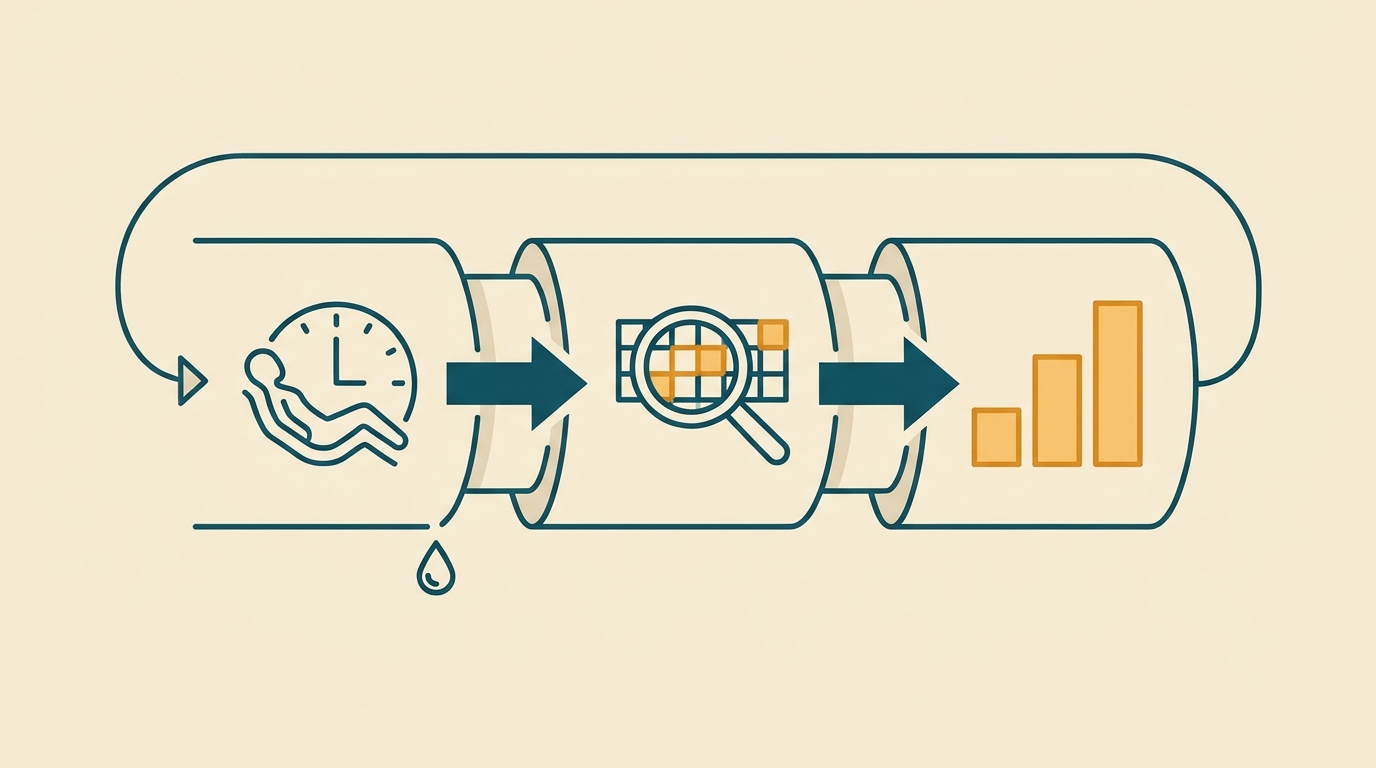

Here's the direct answer: a dental mastermind group built for multi-location owners is separated from a general one by three things — peer composition (members who actually run multiple sites), curriculum focused on cross-location operations rather than single-chair production, and accountability that follows up on implementation across sessions. The label on the group doesn't matter. The people in the room and the problems on the agenda do.
The common belief is that any high-end dental mastermind will serve a multi-location owner well because "a bigger group just means bigger problems." That's wrong. Multi-site operators face a fundamentally different job — delegating clinical and operational decisions, standardizing systems across locations, and managing leaders rather than chairs. A room full of solo owners optimizing their own hygiene schedule can't coach you through that, no matter how smart they are.
Most dental masterminds are populated by single-practice owners because that's the math of the industry. According to ADA Health Policy Institute 2024 data, 33.6% of dentists were in solo practices and another 39.1% were in single-location practices with two or more dentists — meaning roughly three-quarters of the field operates one location. Multi-site operators are the minority, so the default room reflects the default owner.
That's the mechanism behind the myth. When you walk into a general dental mastermind, the agenda bends toward whoever fills the seats. Single-location owners ask single-location questions. The curriculum follows. Even a well-run group drifts toward the median member — which is exactly the wrong gravity when you're trying to standardize operations across five offices.
A real multi-location mastermind covers the operator's job, not the dentist's chair. That means standardizing systems across sites, building a leadership bench so you're not the bottleneck, cross-location KPIs, acquisition underwriting, and compensation structures that scale. A general mastermind drills into single-chair production; a multi-site room drills into portfolio performance.
Take production per hour per chair — a metric that only matters when you can compare it across sites. According to bulletproofdentalpractice.com, a rate under $125 signals broken systems or weak team performance, while $250 or more per hour per chair indicates stable leadership and real systems. The same source compares a 16-chair office running at $232 per hour per chair against a 14-chair competitor at $123 — nearly double the output per unit of capacity, attributed to systems rather than luck. That's the kind of number a multi-location owner lives inside. A solo owner rarely thinks about it.
Bulletproof Dental Practice built its Mastermind community for dentists who are thinking at that level. The group is described as "for the 1% of dentists who want 100% from life" and as "a deeper experience for dentists ready to grow their practice, leadership, and life" — language that explicitly targets growth-stage operators rather than first-year owners finding their footing.
Ask three concrete questions before you wire the fee: What percentage of current members operate two or more locations? Can I see a sample agenda from the last two meetings? How does the group follow up on member commitments between sessions? Vague answers are the signal. A room built for multi-site owners knows its composition cold and can hand you a real agenda.
According to growthmentor.com, most masterminds fail for the same three reasons: the wrong cohort, no real safety, and members who use the room to be reassured instead of challenged. All three show up early if you're paying attention. If the sample agenda is dominated by single-chair production benchmarks, basic marketing tactics, or metrics designed for a solo owner's direct clinical control, you've found a general group wearing a premium label.
Price doesn't tell you quality, but it tells you the tier. According to growthmentor.com, mastermind group costs range from free community pods to $25,000 to $100,000 or more per year for elite rooms. Groups built for multi-location dental owners typically sit in the upper half of that range because the peer caliber, the facilitation, and the accountability infrastructure cost real money to maintain.
What you're actually buying is the cohort. A room of six to twelve multi-site operators, per growthmentor.com's typical mastermind size, is expensive to assemble because those people are hard to recruit and their time is scarce. A cheap group isn't a bargain if the people in it can't help you solve the problem you walked in with.
Here's the side-by-side on the dimensions that actually matter to a multi-site operator:
The biggest red flag is a pitch deck that leads with clinical production tactics. If the group's marketing talks about adding an operatory, closing more Invisalign cases, or the mechanics of a tiered staff bonus, it's a single-location curriculum with a scaling veneer. Those topics matter, but they aren't the job a multi-site owner is hiring the room to help with.
Watch the member composition too. If the published member list skews toward dentists with one practice and "plans to open a second," the room will coach aspirations, not operations. A mature multi-location mastermind has operators who've already made the mistakes you're about to make and can name them before you walk into them.
A mastermind group typically consists of 6 to 12 members, according to growthmentor.com, and that range holds for multi-location dental groups too. Smaller than six and the peer pool is too thin to surface varied experience; larger than twelve and individual accountability erodes. The number matters less than whether the seats are filled by actual multi-site operators.
Mastermind cadence can range from weekly to quarterly on a fixed schedule, per growthmentor.com. For multi-location owners, monthly virtual meetings with two in-person retreats a year is a common rhythm — frequent enough to maintain accountability, spaced enough to actually implement between sessions. The cadence that fails is the one you can't keep.
Yes. A DSO mastermind typically centers on roll-up strategy, private equity relationships, and enterprise-level governance. A multi-location owner-operator mastermind centers on running the practices yourself across two to ten locations. Both are valid, but the conversations, member profiles, and benchmarks differ enough that you should pick based on where your business actually sits today.
You can, but expect to subsidize the learning. A general group populated mostly by single-location owners will bend its agenda toward their questions, and you'll spend time coaching peers rather than being coached. If the group has a dedicated multi-location breakout or a separate cohort for operators with two or more sites, that changes the math.
Ask what percentage of current members operate two or more locations, request a sample agenda from the last two meetings, confirm the follow-up structure between sessions, and ask how members are vetted before admission. If the answers are generic, the room is generic. If the answers are specific and the facilitator can name the cross-site topics covered recently, you're in the right conversation.
Most owners see measurable operational changes within one to two quarters if they actually implement between sessions. The common failure mode is treating the mastermind as content consumption rather than an accountability structure. Results come from closing the loop between what you commit to in the room and what gets executed back at your locations.
A dental mastermind group for multi-location practice owners earns its price by assembling peers who speak your operational language, running a curriculum built for cross-site problems, and holding you accountable to implement between sessions. The label "premium" or "elite" doesn't tell you any of that. The agenda and the member roster do. Bulletproof Dental Practice has worked with dentists on the business of dentistry for 10 years, and its Mastermind, Summit, and podcast are built around operator-level questions rather than clinical ones. Readers in the United States who want to evaluate whether that community fits their multi-location practice can reach Bulletproof Dental Practice at (470) 460-6098 or https://bulletproofdentalpractice.com to start the conversation.