
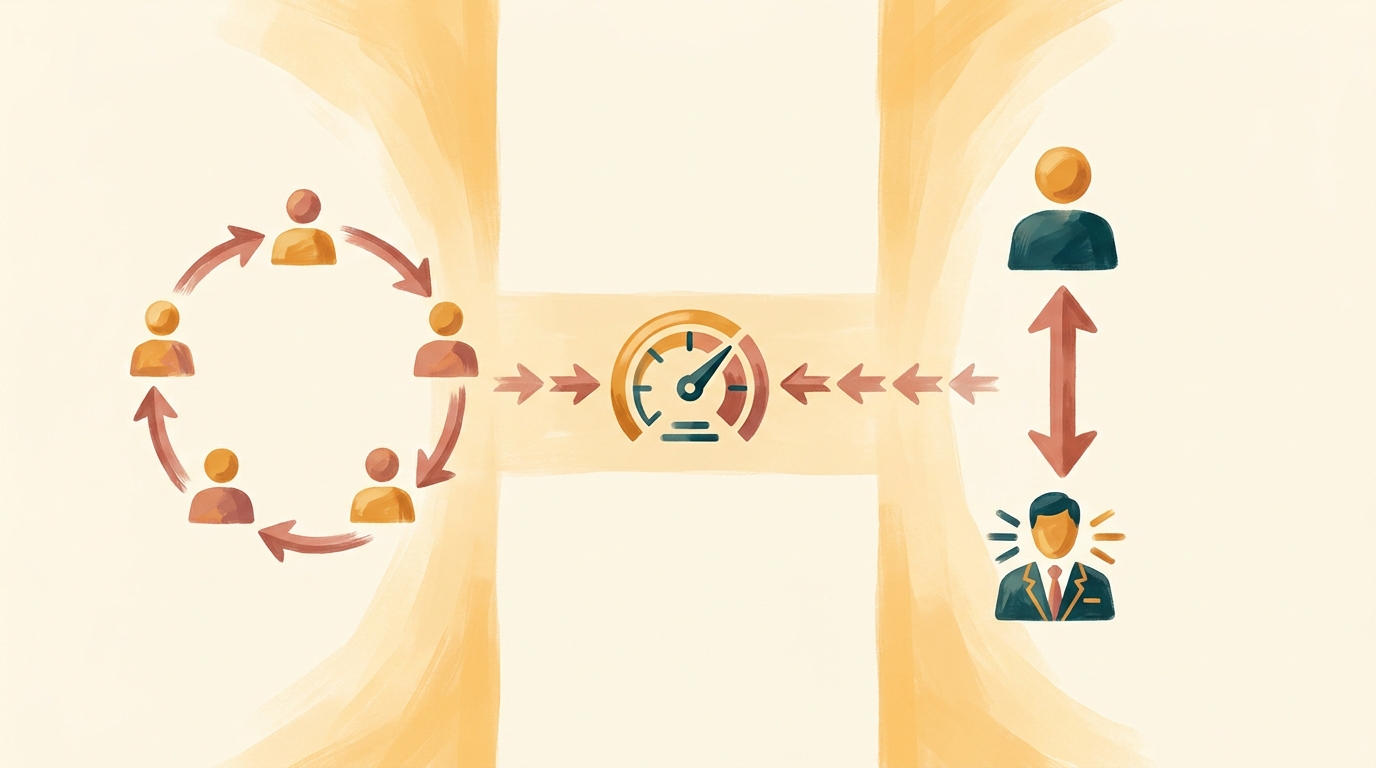
Neither format wins on average. A one-on-one dental consultant grows your practice faster when you have a specific, urgent operational problem — scheduling collapse, case acceptance stalling, collections leaking. A dental mastermind group grows it faster when your fundamentals are stable and the real constraint is isolation, blind spots, or lack of peer accountability. The right answer depends on which bottleneck is actually holding you back right now.
That framing matters because the dental coaching market in the United States is noisy. Both formats are sold as the universal answer. They aren't. Below is how each one actually works under the hood, what it tends to cost, and how to decide which one fits your practice stage — written for owners weighing a real check against real time.
A one-on-one dental consultant is a business professional who builds a customized game plan for your practice and supports implementation across scheduling, hygiene performance, production and collections trends, and revenue cycle management. The engagement is tailored, data-driven, and tied to your specific numbers — not a peer discussion.
The scope is wide on purpose. According to industry descriptions of the role, a consultant analyzes patterns across the entire dental team to surface constraints and opportunities you can't see from the operatory. Some specialize further — the American Association of Dental Consultants, for example, describes dental benefits consultants who focus on insurance, claims policies, network management, standards of care, and utilization.
Engagements are rarely short. Working with a dental consultant often involves continued meetings and visits that may span three to 12 months, because changing scheduling templates, hygiene protocols, and billing workflows is a sequencing problem, not a single workshop. That length is a feature, not a flaw — but it's also why the invoice adds up.
A dental mastermind group is a peer-driven collaborative platform where member dentists share expertise, brainstorm solutions, and hold one another accountable. The value comes from the room, not from a single advisor. You get pattern recognition from owners who have already solved what you're facing.
Formats vary. The AAOSH Mastermind Study Group, open to all AAOSH members, is a focused, high-energy platform where members connect, collaborate, and share expertise bridging oral and systemic health. The Dental Success Institute's Tier Two membership includes two monthly 90-minute group Zoom coaching sessions with its lead dentist, virtual tickets to live Mastermind Events, and two complimentary tickets to the Dental Success Summit.
Bulletproof Dental Practice runs a mastermind community alongside its podcast and Summit event, describing the Mastermind as "for the 1% of dentists who want 100% from life" and as "a deeper experience for dentists ready to grow their practice, leadership, and life." The structure — recurring peer sessions anchored by live gatherings — is typical of serious mastermind programs in the United States.
Here is the practical comparison across the dimensions that actually drive the decision — attention model, cost structure, cadence, and the kind of problem each solves best.
A useful financial frame: a 2024 Dental Economics/Levin Group survey put median dental practice overhead at approximately 62% of collections. That benchmark isn't a target, but it is a reality check — any advisory investment, mastermind or consultant, has to pay for itself inside a cost structure where most of every dollar collected is already spoken for.
Match the format to your current constraint. If one specific KPI is broken — hygiene reappointment, case acceptance, AR over 90 days — a one-on-one consultant can diagnose and sequence a fix inside the 3–12 month window typical of these engagements. If you're a solid operator who feels isolated and under-challenged, a mastermind compounds faster because the input is wider.
A rough decision rule we use at Bulletproof Dental Practice: if you can name the one problem that would unlock the next 12 months of growth, hire a consultant to fix it. If you can't — if you're successful but stuck, or you keep solving the same category of problem — join a mastermind so a room of owners can show you what you're not seeing.
Stage matters too. Early-career owners often benefit from one-on-one structure because they lack the pattern library to use peer input well. Established owners with multiple locations or a DSO track often get more from mastermind rooms, where someone has already navigated the specific scaling question in front of you.
Three criteria matter more than brand names. First, specificity: a consultant should look at your actual production, collections, and scheduling data before quoting a scope — anyone selling a generic package is selling a template. Second, cadence: mastermind value drops sharply when meetings are infrequent or attendance is loose, so interrogate the real meeting rhythm and member retention.
Third, exit terms. Three to 12 months is a long commitment. Ask what happens if the engagement isn't working at month three. Ask what the mastermind refunds, defers, or restructures if your practice hits a cash crunch. The honest providers answer these questions directly.
Bulletproof Dental Practice has focused on the business of dentistry for 10 years through its podcast, Mastermind community, and Summit event, with its podcast producing over 450 episodes and reaching 1 million downloads. For owners who prefer to sample the point of view before committing to any format, that podcast and the weekly email of actionable practice advice are low-friction starting points.
Often, yes, on a per-session basis — but not always on an annual basis. According to truedentalsuccess.com, the Dental Success Institute's Tier Two mastermind runs $19,997 per year, which exceeds some short consulting engagements and undercuts longer ones. Compare total annual spend, not sticker format, and weigh it against the 62% median overhead benchmark reported by Dental Economics/Levin Group in 2024.
Working with a dental consultant often involves continued meetings and visits that may span three to 12 months, according to industry descriptions of the role. That length reflects the sequencing required to change scheduling templates, hygiene protocols, and billing workflows without disrupting production. Shorter engagements exist but usually address a single narrow problem rather than practice-wide transformation.
Cadence varies by program. The AAOSH Mastermind Study Group is open to all AAOSH members and focuses on bridging oral and systemic health. The Dental Success Institute's Tier Two membership includes two monthly 90-minute group Zoom coaching sessions plus live event access. Before joining any mastermind, confirm the actual meeting rhythm, whether sessions are live or recorded, and typical member attendance — advertised cadence and real cadence are not always the same.
Yes, especially solo owners who feel isolated from peer input. Mastermind groups give solo dentists exposure to how other owners handle hiring, PPO negotiation, scheduling, and ownership transitions. The caveat is readiness: a solo owner without stable fundamentals usually benefits more from one-on-one consulting first, then layers in a mastermind once operations are predictable enough to apply peer advice.
Bulletproof Dental Practice describes its Mastermind as being "for the 1% of dentists who want 100% from life" and as "a deeper experience for dentists ready to grow their practice, leadership, and life." It sits alongside the Bulletproof Dental Practice podcast and the Summit event as one of the company's primary offerings for practice owners who want peer-driven growth support.
Sometimes, but rarely at full intensity. A common pattern is to use a one-on-one consultant to fix a specific operational problem over three to 12 months, then transition into an ongoing mastermind for peer accountability once the fix is in place. Running both at full scope simultaneously tends to split your attention and dilutes the ROI of each.
Pick the format that matches your actual constraint. One-on-one consulting earns its fee when a specific operational problem is bleeding money and you need a tailored plan. A mastermind earns its fee when your fundamentals are solid and the growth bottleneck is isolation or missing perspective. Either way, size the investment against the overhead reality — median dental practice overhead sits near 62% of collections, and advisory spend has to earn its keep inside that math.
Dental practice owners in the United States weighing these two formats can reach Bulletproof Dental Practice at (470) 460-6098 or https://bulletproofdentalpractice.com to learn more about its Mastermind community, Summit event, and podcast.