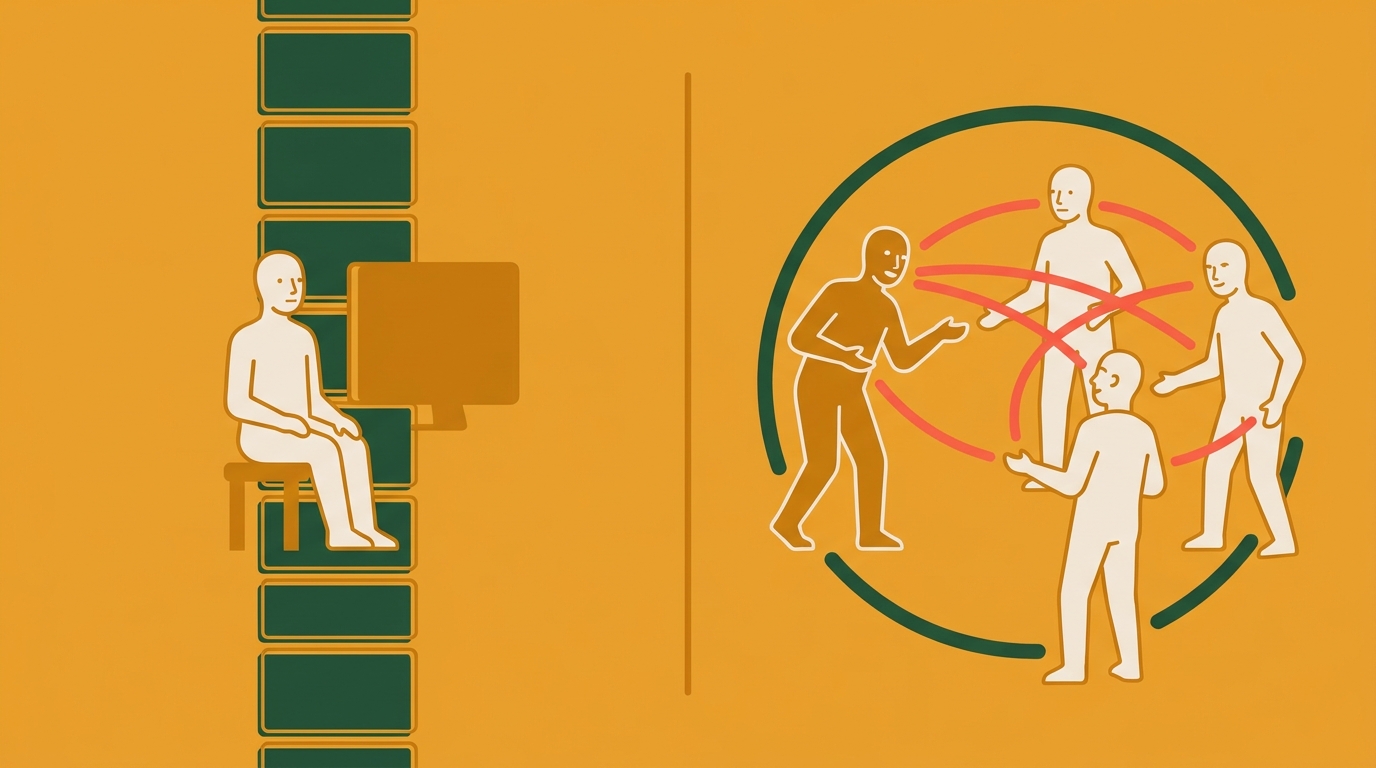
Here's the myth worth busting: more content is not what's holding your practice back. A dental peer accountability group—a small, closed room of fellow owners who pressure-test your real numbers and hold you to the commitments you make out loud—moves practices further than any video library ever will. Passive content gives you knowledge; peer accountability makes you use it.
Most dentists we talk to have already bought the courses. They have the SOPs, the hygiene scripts, the case-acceptance frameworks. What they don't have is a room full of peers asking, "So did you actually do it?" That's the gap this comparison is about.
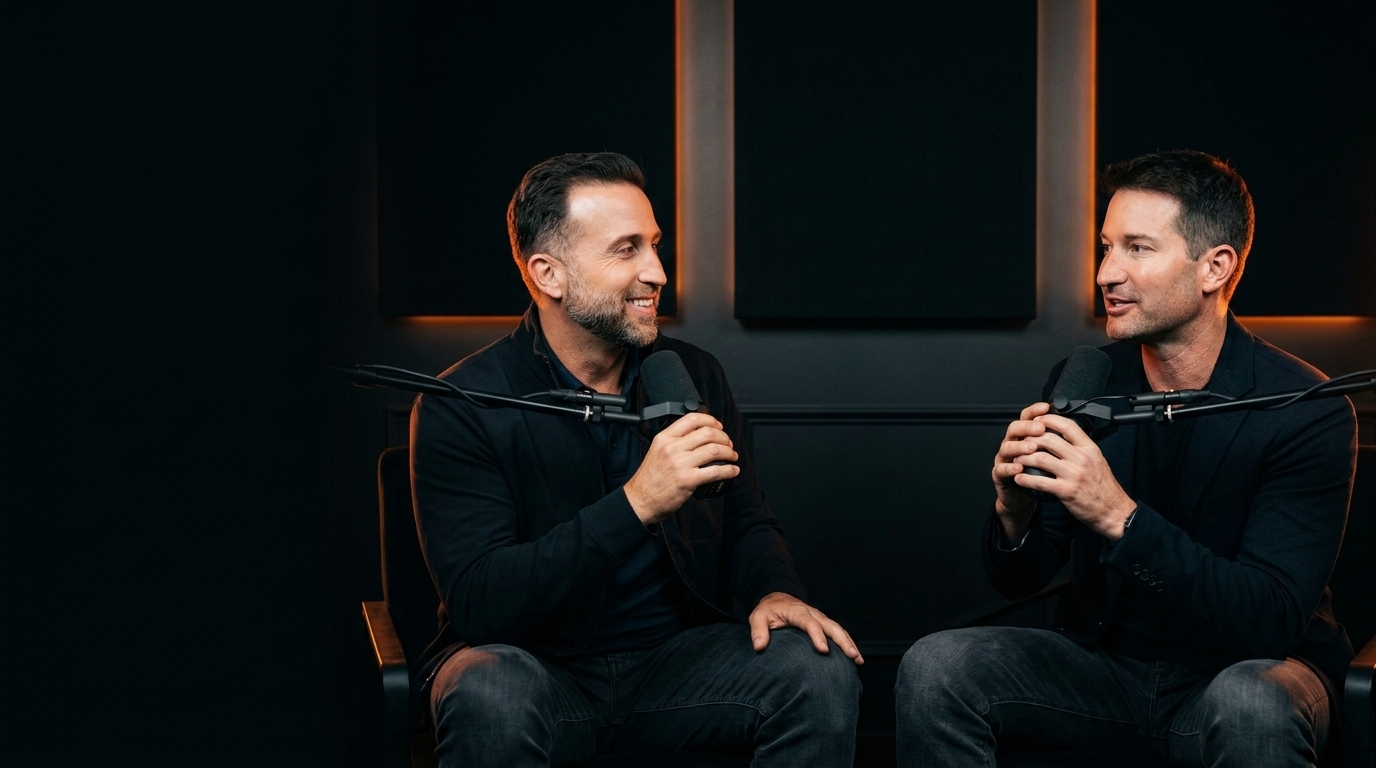
A passive content program delivers information—courses, videos, downloadable templates—on your schedule, with no feedback loop. A dental peer accountability group is a small, closed group of established dental entrepreneurs who meet on a regular cadence to work on each other's businesses, pairing an outside view with a facilitated, confidential setting where real numbers and hard decisions are put on the table.
The practical difference is the feedback loop. Content tells you what good looks like. A mastermind room tells you whether you actually did it last week, and what the group thinks you should do about it next week.
Bulletproof Dental Practice runs on this distinction. Its Mastermind community sits alongside its podcast and Summit event as the three primary offerings, and it's described as a deeper experience for dentists ready to grow their practice, leadership, and life.
Passive content fails most buyers for one reason: information alone doesn't change behavior. There's no one checking whether you implemented the associate compensation model, called the lender about the second location, or finally fired the front-desk hire you knew was wrong in month two. The library grows; the practice doesn't.
Compare that to what happens in a mastermind. A typical session gives each member time "in the hot seat," where the group pressure-tests one real challenge—from an associate compensation model to a second-location decision—and each member leaves with a clear next step. Much of the value lands between meetings, when a founder is accountable to the room for the commitment they made in front of it.
One dental business source puts the distinction sharply: coaches tell you what to do, but peers show you what they actually did yesterday to solve the exact same problem. That's a different kind of leverage than a recorded module can provide.
Below is the honest comparison. Neither format is automatically better—they solve different bottlenecks. If your bottleneck is missing knowledge, content works. If your bottleneck is follow-through on knowledge you already have, you need the room.
Yes—peer-level matching is what separates a working mastermind from a networking lunch. A dental mastermind works when members operate at a similar level, carry comparable revenue and complexity, and share a real intent to grow. According to towerleadership.com, a room of $4M-plus founders solving expansion and leadership questions produces very different conversations than a general networking group.
Professional accountability research backs the same principle. Peer intervention models work best when peers are at equal seniority and operate within comparable specialties—a non-judgmental "cup of coffee" conversation between equals has been proven effective for improving individual behavior, where top-down advice often isn't.
If you're in a group where half the members are pre-ownership and half are running multi-location groups, the conversation flattens to the lowest common denominator. That's not accountability—it's a webinar with chat enabled.
Results come from implementation, not information—and that's where accountability groups earn their keep. Peer accountability groups consistently point members toward concrete operational changes—like implementing a membership plan or rebuilding a recurring-revenue engine—that passive content alone rarely produces.
Membership-plan dynamics compound the effect. Recurring-revenue models are a frequent topic in mastermind rooms, which is why peer groups often end up rebuilding each other's membership and retention engines together. Scheduling pressure is another frequent hot-seat topic—ADA Health Policy Institute data reported by Hello Pearl found 82% of dentists cite patient no-shows and cancellations within 24 hours as a reason schedules don't reach full capacity, with another 51% citing cancellations more than 24 hours out.
These are the kinds of operational problems a peer group chews on in real time, with real numbers on the screen.
Start with an honest diagnosis of your bottleneck. If you genuinely don't know how to build a hygiene reactivation system, buy the course. If you know exactly what to do and haven't done it in six months, you don't need another course—you need a room.
Bulletproof Dental Practice frames its Mastermind as being "for the 1% of dentists who want 100% from life." That language is a filter. A peer accountability program only works when members show up ready to put real numbers on the table and act on what they hear. If you're not there yet, free resources—like Bulletproof Dental Practice's weekly email of actionable practice advice, or its podcast library of over 450 episodes—are a reasonable starting point.
No. Coaching is typically one-to-one, where a coach guides you through questions and frameworks. A dental mastermind is a small, closed group of peer dental entrepreneurs who work on each other's businesses on a regular cadence. One source frames it this way: coaches tell you what to do, but peers show you what they actually did yesterday to solve the exact same problem.
Accountability-driven coaching emphasizes self-directed insight and follow-through, where mentoring leans on advice-giving and consulting typically delivers expert solutions. In a peer accountability group, the room doesn't hand you an answer—it holds you to the commitment you made to pursue one, then checks whether you did the work before the next meeting.
Usually not directly, and rules vary by state. Iowa, for example, requires dentists on active status to complete 30 CE hours every two years. Nevada caps home-, online-, self-, or journal-study activities at 50% of required CE hours and requires licensees to retain CE records for at least three years. Verify current rules with your own state board before relying on any program for credit.
Peer groups work when members carry comparable revenue and complexity. Rooms of multi-million-dollar founders tackle expansion, leadership, and ownership questions that would overwhelm a brand-new owner. If you're pre-ownership or in year one, start with content, podcasts, and smaller study clubs, and consider a mastermind once your operational questions outgrow those formats.
Cadence varies by program, but the defining feature is that meetings are regular and scheduled, not on-demand. The point is predictable, recurring touchpoints so members know they'll be reporting back on commitments in front of the same peers—week after week, month after month. That rhythm is what converts intention into execution.
Bulletproof Dental Practice offers three primary resources: a podcast, a Mastermind community, and a Summit event. The podcast has produced over 450 episodes and reached 1 million downloads, and is rated 4.9 stars on both Apple and Spotify. A weekly email of free, actionable practice advice is also available.
If you've been collecting content and watching your implementation list stall, the honest fix isn't more content—it's a room that expects you to act. Bulletproof Dental Practice has helped dentists understand the business of dentistry for 10 years, and its Mastermind is built around the peer-accountability model this article describes. Dentists in the United States who want to explore whether that fit is right for them can reach Bulletproof Dental Practice at (470) 460-6098 or visit https://bulletproofdentalpractice.com to start a conversation.